
Mold Remediation
Assessment, containment, removal, cleaning, and restoration planning for building materials affected by mold growth.
Serving Madison, Wisconsin & surrounding areas
Get a clear response plan for removing standing water, drying affected materials, cleaning the damaged area, and planning repairs after a leak, overflow, or storm.
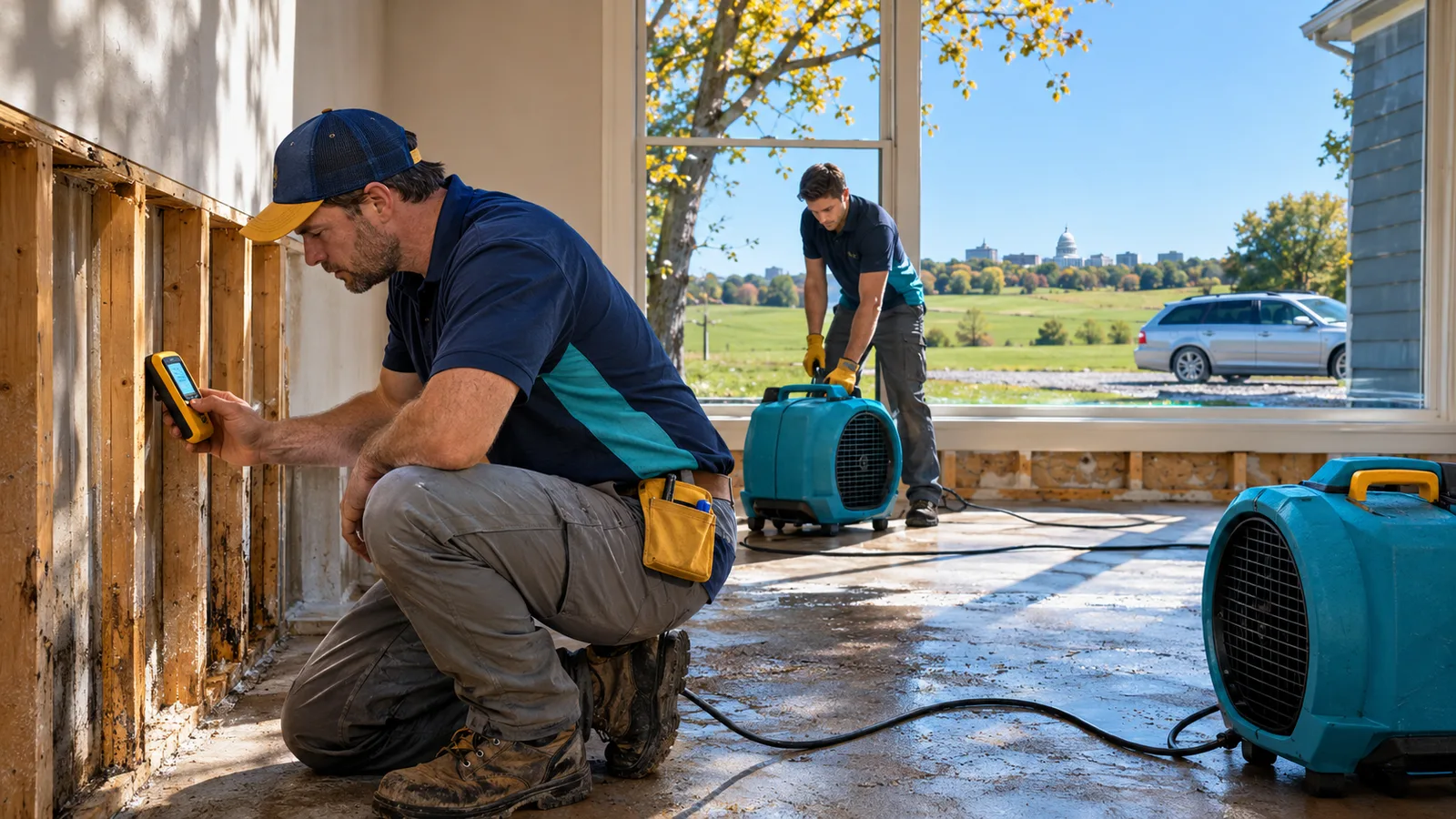
Follow the water, not just the visible stain
Water damage restoration Madison WI property owners can rely on starts with finding where the water traveled, not simply drying the visible surface. Water can move beneath flooring, behind baseboards, through wall cavities, and into insulation. A careful assessment identifies affected materials and helps define the work before cleanup begins.
The restoration process may include water extraction, removal of materials that cannot be saved, cleaning, controlled structural drying, and repair planning. Moisture meters help track conditions in drywall, framing, subfloors, and other building materials. Air movers promote evaporation, while dehumidifiers collect moisture from the air. The goal is a dry, clean structure with documented next steps for repairs.
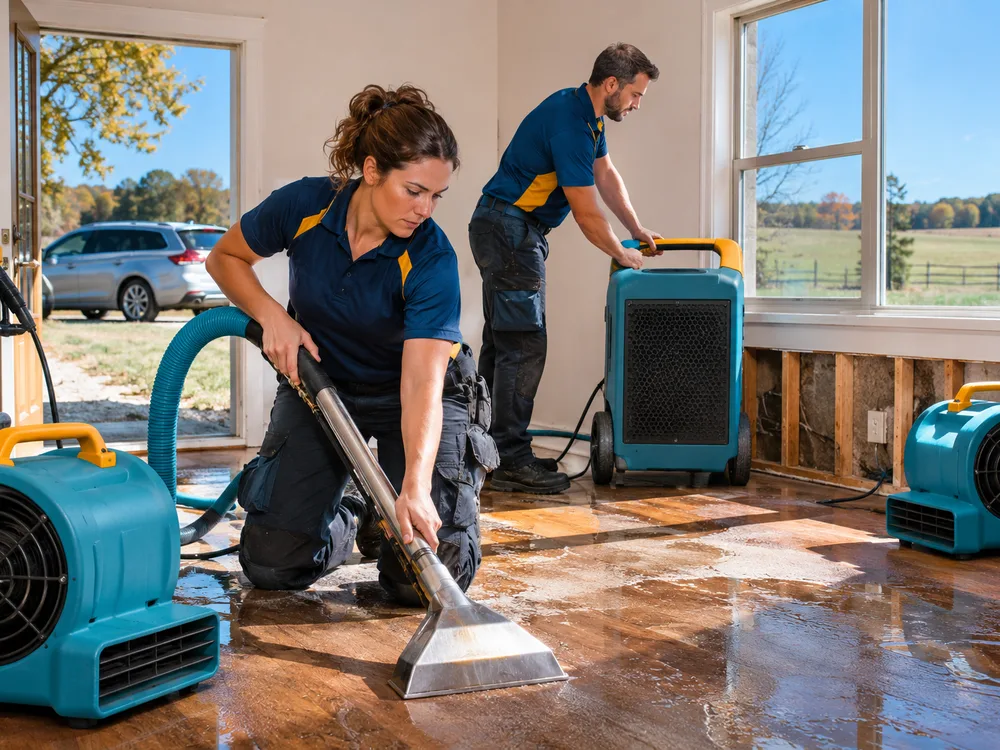
Coordinated property recovery
Assessment, containment, removal, cleaning, and restoration planning for building materials affected by mold growth.
Professional removal of visible mold and affected porous materials, with cleaning measures suited to the location and extent of growth.
Cleanup and repair planning for damaged residential or commercial spaces, including the transition from mitigation work to reconstruction.
Extraction, cleanup, drying, and material assessment after plumbing leaks, appliance failures, overflows, or weather-related water intrusion.
From the first reading to repair planning
Visible water rarely shows the full affected area. Moisture readings help locate damp drywall, framing, flooring, and subfloors so the drying plan addresses materials that require attention.
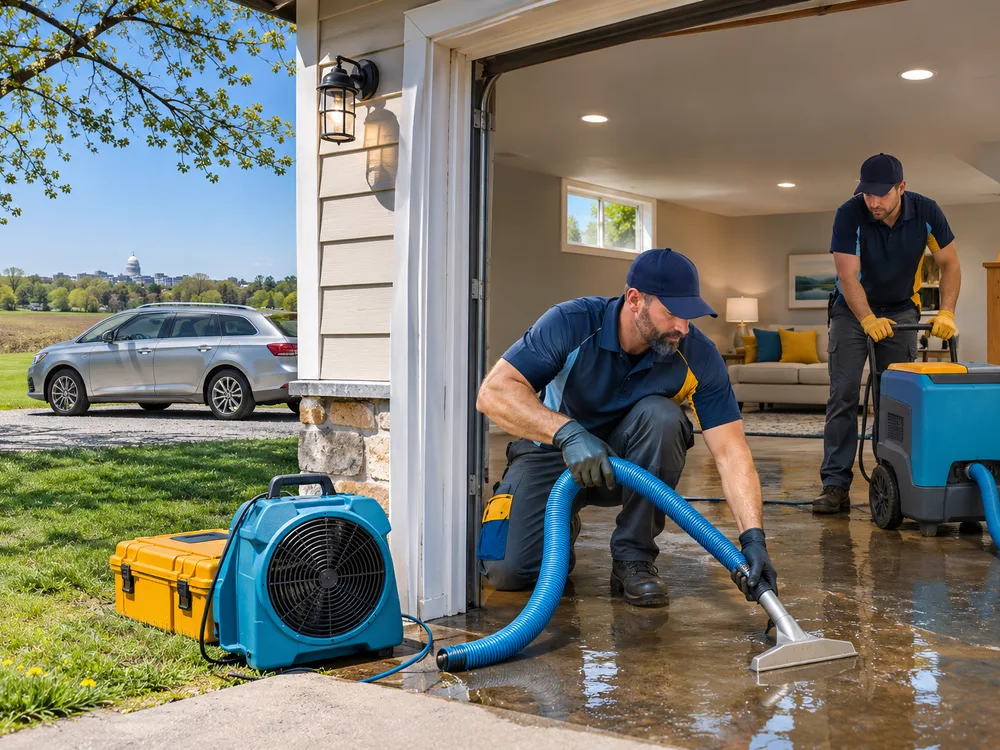
Removing standing water promptly limits continued absorption into porous materials. Extraction equipment is selected according to the surface, water depth, access, and condition of carpet, pad, flooring, or unfinished space.
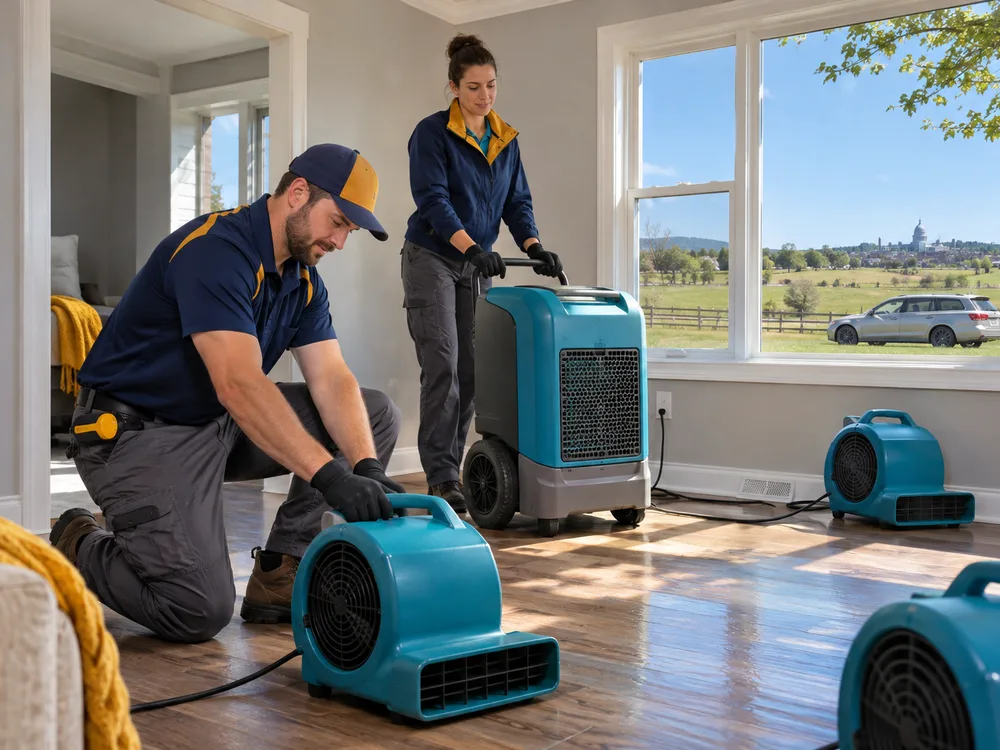
Air movers and dehumidifiers work together to promote evaporation and remove moisture from the air. Equipment placement and drying progress should respond to actual material readings rather than surface appearance alone.
Some materials can be cleaned and dried, while others may require removal because of contamination, swelling, delamination, or loss of structural integrity. Those decisions shape the scope and repair plan.
Once affected areas are dry, the remaining work may include cleaning, odor control, drywall replacement, trim work, flooring repairs, or painting. A defined scope helps property owners understand what comes next.
Water Damage Restoration Madison WI provides water damage restoration in Madison, Wisconsin.

The work centers on the practical stages that follow unwanted water: assessing affected areas, extracting water, evaluating materials, supporting structural drying, and defining repair needs. Madison properties face varied conditions, including winter freeze and thaw cycles, heavy seasonal rain, plumbing failures, appliance leaks, and basement seepage.
A trustworthy scope separates immediate mitigation from later repairs and explains why materials are dried, cleaned, or removed. Property owners also benefit from photographs, moisture readings, and written records when communicating with an insurer. Coverage decisions remain with the insurance carrier, but clear documentation can make the loss easier to describe and review.
Request Emergency ServiceWater damage restoration in Madison typically costs about $1,500 to $6,000 for a contained residential loss. Minor extraction and drying may run $500 to $1,500, while widespread damage involving demolition, prolonged drying, or repairs can exceed $10,000.
Final price changes with the affected area, water category, materials, accessibility, equipment time, and required reconstruction. Sewage, finished basements, hardwood flooring, and water inside wall cavities generally increase the scope. The exact cost is confirmed after an on-site inspection identifies affected materials and documents the restoration plan.
Request Emergency ServiceA measured sequence
Assessment, extraction, drying, monitoring, and repair planning work together to move the property from active damage toward a defined restoration scope.
Request Emergency ServiceThe first step is to identify whether the source has stopped, check visible damage, take moisture readings, and determine where water may have moved beyond the original room.
Standing water is removed where accessible. Items may be moved from affected areas, and unsafe or unsalvageable materials are identified for controlled removal.
Affected surfaces are cleaned as conditions require. Air movers and dehumidifiers are then placed to dry framing, flooring, drywall, and other materials that can remain.
Drying progress is checked with moisture instruments. Equipment placement or operation may be adjusted based on material readings and conditions inside the affected space.
After drying is complete, the remaining repair scope can be defined. This may involve drywall, insulation, trim, paint, flooring, cabinetry, or other finishes disturbed by the loss.
The sooner affected materials are assessed, the sooner you can make informed decisions about extraction, drying, removal, and repairs.
Call for Emergency HelpLocal property conditions matter
Water Damage Restoration Madison WI serves homes and properties throughout Madison, including established neighborhoods with basements, older building materials, and varied drainage conditions.
Apartments, condominiums, and mixed-use buildings can place damaged areas near neighboring units, making moisture tracing and coordinated access especially important.
Older homes and multifamily properties may contain plaster walls, wood flooring, and finished lower levels that require careful material assessment after a leak.
A mix of older houses and newer infill means restoration scopes can involve original woodwork, updated interiors, basements, or multiple layers of flooring.
Established homes in this area often contain finished basements and older building assemblies where water can travel behind trim, beneath flooring, or into wall cavities.
Mid-century homes may have basements, hardwood floors, and remodeled spaces that need moisture checks beyond the room where water first appeared.
Ranch and split-level homes can experience plumbing leaks or lower-level water intrusion that affects subfloors, wall bases, insulation, and finished rooms.
Equipment, readings, and active drying

Practical answers before work begins
Scheduling depends on current response demand and the conditions at the property. Active leaks should be stopped when it is safe to do so, and standing water or wet building materials should be assessed promptly, especially during freeze events or periods of heavy rain.
Be ready to describe the water source, when the problem began, which rooms are affected, whether water is still entering, and whether electrical panels or outlets are near the wet area. Photos can help document visible conditions before work starts.
Occupancy depends on the source, contamination level, affected location, electrical conditions, and extent of material removal. A contained clean-water loss may allow normal use of other rooms, while sewage or significant safety hazards may require restricted access.
Repair needs are defined after damaged materials are removed and the structure is dry. Depending on the loss, the scope may include drywall, insulation, trim, painting, flooring, cabinetry, or other finishes affected during cleanup.
Restoration documentation can support an insurance claim, but the carrier decides coverage. Photographs, moisture readings, equipment records, and an itemized scope help explain what was affected and why specific work was performed.
Do not enter areas with electrical hazards, sagging ceilings, sewage, or questionable structural conditions. Avoid using ordinary household vacuums on water. If it is safe, stop the source and move unaffected belongings away from the wet area.
Describe what happened and where the water traveled. Water Damage Restoration Madison WI can help define the cleanup, drying, and repair work your property requires.